
If you have been living with perioral dermatitis, you will know exactly how exhausting and demoralising this condition can be. The persistent red clusters around your mouth, the burning and stinging that flares up without warning, and the creeping suspicion that every product you try will only make things worse. Conventional treatments often provide short-term relief at best, and in many cases the preparations prescribed to calm the skin end up prolonging the problem over months and perhaps even years.
This article sets out a different path, one that addresses the root causes rather than a focus on suppressing the symptoms, and brings together the most useful evidence-based natural strategies alongside the individualised depth of homeopathic treatment. If you are ready to understand what is actually driving your skin to behave in the way it does, and to take a genuinely holistic approach to healing it, read on.
What is Perioral Dermatitis?
Perioral dermatitis is a common yet frequently misunderstood inflammatory skin condition. It is characterised by clusters of small red papules and pustules, often surrounded by pink, scaly patches, that appear most typically around the mouth, nose, and eyes.
The condition is also referred to as periorificial dermatitis when it involves more than one facial opening. It primarily affects women between the ages of 16 and 45, though it also occurs in men, children, and older adults.
What makes perioral dermatitis particularly frustrating is its stubborn, cyclical nature. Without properly addressing the underlying triggers, episodes can last for months or even years, frequently returning after periods of apparent calm and causing considerable distress to those affected.
Understanding What Triggers it
Identifying your triggers is the single most important step in managing perioral dermatitis. Several well-known factors can initiate or perpetuate the condition, and in many patients more than one trigger is at work at the same time.
Topical and Inhaled Corticosteroids
Topical corticosteroids are widely considered the most significant trigger for perioral dermatitis. Many patients develop the condition after applying steroid creams to the face which are often originally prescribed for an unrelated issue such as eczema or an allergic reaction. Crucially, when the steroid is stopped, the skin typically flares even more dramatically. This is a rebound effect that traps people in a cycle of repeated use and which worsens the condition over time. This pattern was clearly demonstrated in a clinical study of 110 patients published in the Indian Journal of Dermatology, Venereology and Leprology (Rathi and Kumrah, 2011). Inhaled and nasal corticosteroids used for asthma or hay fever can also provoke the condition even when not applied directly to the skin.
Cosmetic and Skincare Products
Heavy moisturisers, occlusive foundations, and fluorinated toothpastes are all implicated in perioral dermatitis. An Australian study found that layering foundation over moisturiser was associated with a thirteen-fold increased risk of developing the condition. The skin around the mouth and nose is particularly sensitive to heavy layering and chemical irritation, and many well-intentioned skincare routines inadvertently make the problem worse.
Hormonal Factors
Hormonal fluctuations can play a significant role in many cases. Women experiencing perimenopause, pregnant women, and those taking oral contraceptives may find that perioral dermatitis appears or worsens during these times. This hormonal fluctuation may help to explain why the condition is so much more prevalent in women of reproductive age.
Emotional and Lifestyle Factors
Chronic stress, low frustration tolerance, and regular alcohol consumption have all been associated with perioral dermatitis flare-ups. The skin is profoundly connected to the nervous and endocrine systems, and sustained emotional pressure leaves visible traces on the face.
Microbial Triggers
Certain micro-organisms appear to contribute to the condition. Candida albicans overgrowth, Demodex mite infestation, and heightened photosensitivity have all been linked to perioral dermatitis in published literature. These microbial factors are relevant when considering both dietary choices and homeopathic approaches to treatment.
Common Symptoms
Perioral dermatitis presents with a distinctive set of symptoms. These include:
- burning and stinging sensations around the mouth, nose, or eyes
- intense itching of the affected skin
- dryness and increased sensitivity to skincare and cosmetic products
- occasional cracking or surface irritation at the corners of the mouth
- associated blepharitiss which is an inflammation of the eyelids
It is important to note that scratching the affected area significantly worsens symptoms. Repeated scratching disrupts the skin barrier further, increases the risk of secondary infection, and raises the likelihood of lasting scarring in the affected area.
Complementary and Alternative Medicine: What the Evidence Says
A number of complementary and natural approaches have a meaningful place in managing perioral dermatitis. The evidence base varies across these approaches, and what follows is intended to distinguish between those with published research behind them and those that are primarily based on anecdotal or clinical observation.
The Gut-Skin Axis and Probiotics
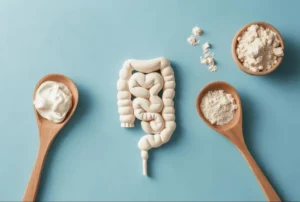
One of the more compelling areas of emerging research is the relationship between gut health and skin inflammation. Growing evidence links disruption of the gut microbiome, known as dysbiosis, to a range of inflammatory skin conditions, including perioral dermatitis. Published research in Nutrients (Gao et al., 2023) outlines the mechanisms through which the gut-skin axis influences skin immunity and barrier function, providing a strong theoretical and practical basis for addressing gut health as part of any skin protocol.
Specific probiotic strains, including Lactobacillus rhamnosus and Bifidobacterium breve, have shown benefits in reducing inflammation in atopic skin conditions. Including a daily multi-strain probiotic supplement or fermented foods such as kefir, natural yoghurt, and sauerkraut is a sensible and evidence-aligned starting point.
Dietary Adjustments
Diet does not cause perioral dermatitis on its own, but it can steadily feed the inflammation that drives it. Reducing refined sugar, alcohol, and ultra-processed foods helps reduce gut dysbiosis and lowers the broader inflammatory load on the body.
Some patients report noticeable improvement after identifying and eliminating specific food sensitivities. The most commonly reported culprits include dairy products, gluten, and yeast-containing foods. An anti-inflammatory dietary pattern built around leafy greens, oily fish, berries, and wholegrains provides a strong foundation for skin recovery.
Zinc
Zinc is an essential mineral for skin integrity, wound healing, and immune regulation, and it is frequently found to be deficient in patients with inflammatory skin conditions. A 2023 review in Frontiers in Medicine found zinc supplementation to be beneficial across a range of inflammatory skin conditions, supporting its use as part of a skin-focused nutritional protocol.
Topical zinc preparations can help reduce localised inflammation and provide a mild antibacterial effect on the skin surface. Oral zinc gluconate is considered the most gentle and well-absorbed form for systemic supplementation. A typical supportive dose is 15 to 30 mg of zinc gluconate daily, taken with food to reduce the risk of nausea. Consulting a practitioner before beginning supplementation is advisable, as excess zinc over time can interfere with copper absorption and produce adverse effects.
Gentle Skincare Reset
One of the most effective and immediate interventions is simply removing the products that may be perpetuating the problem. Strip your routine back to the bare minimum and rebuild slowly:
- use a gentle, non-foaming, fragrance-free cleanser once or twice daily
- avoid occlusive creams and heavy moisturisers on the affected area
- avoid products containing sodium lauryl sulphate, which is a common foaming agent that strips and irritates the skin barrier
- switch to a non-fluoridated toothpaste as an immediate and straightforward first step
- apply nothing to the affected skin that has not been clearly tolerated over a period of time
- avoid wearing heavy foundation or layering multiple products over the affected area
Less is consistently more. The skin needs space to recover, and every additional product applied to a compromised barrier is a potential source of further irritation.
Stress and the Nervous System
Chronic stress elevates cortisol levels, which in turn disrupts the skin barrier, suppresses local immune responses, and promotes sustained inflammation throughout the body. For many patients with perioral dermatitis, this is not a minor contributing factor. It is a central and ongoing driver of their condition.
Practical and accessible interventions include daily mindfulness practice, structured breathwork, gentle yoga, and ensuring consistent, adequate sleep. These are not luxury additions to a skin protocol. For a significant proportion of sufferers, addressing emotional wellbeing and nervous system regulation is the missing piece that allows all other treatments to finally take hold.
Other Natural Approaches
A few other natural remedies are worth a brief mention, with appropriate caution regarding their use:
- aloe vera gel has well-established cooling and anti-inflammatory properties, and can soothe the affected area without clogging pores or adding to the chemical burden
- coconut oil has mild antibacterial properties and acts as a gentle, natural emollient; apply with clean hands only and monitor your skin’s response carefully
- despite their widespread popularity in natural skincare circles, apple cider vinegar and tea tree oil, should be avoided directly on affected skin, as both can irritate and further damage an already compromised skin barrier
Homeopathy for Perioral Dermatitis: A Deeper, More Lasting Approach
Homeopathy offers something that most conventional and complementary approaches do not: a genuinely individualised assessment of the whole person. For a condition as layered and cyclical as perioral dermatitis, this depth of assessment is often what makes the critical difference between managing symptoms and achieving lasting resolution.
How Homeopathy is Different
Homeopathy does not treat the skin in isolation. It seeks to understand the whole person, including their emotional state, hormonal patterns, digestive health, and the specific circumstances in which their symptoms first appeared and subsequently evolved.
When corticosteroids, hormonal shifts, or prolonged psychological stress have been involved, homeopathic treatment first works to stabilise and support the system before moving to deeper constitutional treatment. This layered, progressive approach takes time, but it addresses the actual terrain from which the condition has arisen rather than applying a temporary topical intervention.
This is why homeopathic practitioners frequently report sustained improvements in patients who have cycled through multiple conventional treatments without lasting relief. The goal is not to suppress the skin’s response. The goal is to restore balance at a deeper level so that the skin no longer needs to react at all.
The Homeopathic Consultation
A trained homeopath will take a thorough case history covering skin symptoms, known triggers, lifestyle factors, emotional state, hormonal history, digestive patterns, and sleep quality. Remedies are not selected for the diagnosis of perioral dermatitis itself. They are selected for the unique and individual symptom picture of the person being treated.
This approach requires time, skill, and careful listening. Details that might seem irrelevant, such as whether symptoms improve in fresh air or worsen after eating, are often diagnostically significant. This is why two people with identical-looking skin conditions will frequently receive entirely different remedies.
Key Homeopathic Remedies for Perioral Dermatitis
The following remedies are among the most commonly indicated for perioral dermatitis. They are offered as a guide to the kinds of presentations homeopaths work with, and should always be prescribed by a trained homeopath for best results. Self-prescribing without professional guidance is unlikely to produce the deep, sustained improvements that a well-taken case can achieve.
Antimonium Crudum
- small red pimples accompanied by a thickly coated white tongue
- indigestion and digestive upset alongside skin symptoms
- symptoms worsen in hot weather and are frequently triggered by alcohol or overeating
Graphites
- pimples with a sticky, thin discharge from the affected area
- cracked lips and a sensation of cobwebs on the face
- the individual may be constipated, emotionally subdued, and prone to delayed menstruation, with symptoms that improve in fresh, open air
Nux Vomica
- strongly linked to excess alcohol consumption, smoking, overwork, or sustained high stress
- digestive symptoms accompany the skin condition throughout its course
- symptoms worsen after rich food, strong odours, bright lights, or noise
Pulsatilla
- women whose symptoms consistently worsen around the time of menstruation
- burning and stinging around the lips, typically worse in the evening and at night
- the individual is emotionally sensitive, sensitive to rich or fatty foods, and feels noticeably better in fresh open air
Sepia
- clear hormonal triggers: perimenopause, oral contraceptive use, or irregular menstrual cycles
- refined sugar aggravates the skin; the face appears flushed and itchy
- the individual feels emotionally withdrawn and indifferent to those around them, but experiences notable improvement with vigorous exercise or movement
Arsenicum Album
- intense burning sensations combined with itching and a foul or offensive discharge
- relief comes from warmth and warm applications. and symptoms worsen markedly in cold conditions
- the individual is anxious, restless, and highly preoccupied with their appearance and general health
Ledum Palustre
- red, pimply eruptions that sting noticeably when touched or pressed
- better for cold applications; worse from heat, including the warmth of the bed at night
- often associated with a history of regular alcohol consumption
Hydrastis
- spots and eruptions concentrated predominantly around the chin area
- thick, yellow, viscous discharge from the skin surface
- generally unhealthy-looking skin with a tendency towards excessive perspiration and poor healing
A Practical Homeopathic Protocol
Homeopathic treatment for perioral dermatitis works best when it follows a clear and considered sequence:
- Step 1: Identify and begin removing the most likely trigger, whether that is steroid use, specific skincare products, or dietary factors
- Step 2: Consult a trained homeopath for a detailed case analysis and individualised remedy selection
- Step 3: Begin the prescribed remedy at the recommended potency and frequency; do not self-dose or increase potency without guidance
- Step 4: Expect an initial period of stabilisation, particularly if corticosteroids have been involved; the skin may fluctuate before it settles
- Step 5: Monitor changes not only in the skin, but also in energy levels, mood, digestion, and sleep, as homeopathic treatment affects the whole person
- Step 6: Follow up with your homeopath regularly as the remedy and potency will likely need to be adjusted as the case evolves and deeper constitutional patterns emerge
Patience is essential throughout this process. Perioral dermatitis that has been present for months or years, or that has been driven by long-term steroid use, will not resolve overnight or quicklly. Steady, committed treatment with a well-matched remedy, supported by the lifestyle measures described throughout this article, offers the most realistic and the most durable path to clear, calm skin.
Your Practical Daily Protocol
Regardless of whether you are pursuing homeopathic treatment or working through the natural approaches outlined above, the following daily steps form the bedrock of recovery. You can begin most of these today without waiting for a professional appointment.
- Be patient. Deep healing takes time, particularly when the condition has become chronic, but lasting improvement is entirely achievable.
- Stop using topical steroids on the face. If you have used them for an extended period, taper off gradually rather than stopping abruptly, and seek guidance from a practitioner to manage the rebound phase safely.
- Simplify your skincare to the bare minimum: one gentle, fragrance-free cleanser and a light, non-comedogenic moisturiser if required. Remove everything else until the skin stabilises.
- Switch to a non-fluoridated toothpaste immediately. This is a small change that makes a consistent difference for many patients.
- Take a daily probiotic supplement with multiple Lactobacillus and Bifidobacterium strains. Look for a product with at least 10 billion CFU.
- Reduce refined sugar, alcohol, and ultra-processed foods from your daily diet.
- Introduce anti-inflammatory foods: oily fish such as salmon and mackerel, leafy greens, berries, and fermented foods eaten daily.
- Manage stress actively and consistently. Daily walks, breathwork exercises, or a short mindfulness practice each morning are all effective and accessible starting points.
- Consider zinc gluconate supplementation at 15 to 30 mg daily, taken with food. Discuss with a practitioner before beginning.
- Apply pure aloe vera gel to the affected area once daily. It soothes inflammation, cools the skin, and adds no chemical burden to a compromised skin barrier.
- Book a consultation with a trained homeopath for a full case analysis and personalised remedy selection.
Bringing it All Together
Perioral dermatitis is a genuinely frustrating condition, and anyone who has lived with it knows that topical treatments and quick fixes rarely provide the lasting relief that is needed. The good news is that when the root causes are properly understood and addressed, the skin has a remarkable capacity to heal. A holistic approach that combines sensible daily habits, targeted nutritional support, and individualised homeopathic treatment gives the body the conditions it needs to restore balance from within. Clear, calm skin is not out of reach. It simply requires a different kind of attention and the commitment to see it through.