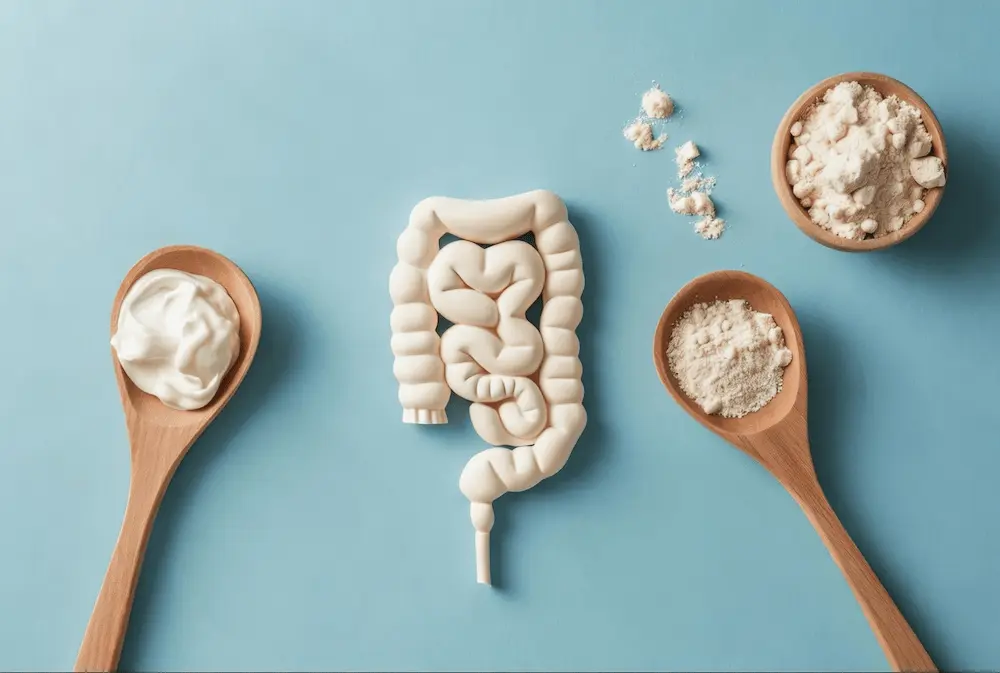
This protocol draws together some of the most promising strategies from the emerging evidence base and organises them into a clear, practical framework. The aim is not a quick fix, but a structured, research-informed guide that supports one in understanding their triggers, calming their gut–brain axis, and gradually restoring confidence in their body.
What is IBS?
If you have been told you have irritable bowel syndrome (IBS), you are far from alone. IBS is the most commonly diagnosed gastrointestinal condition in the world, and in the UK alone it affects up to 20% of the population at some point in their lives. Most people first notice symptoms in their twenties or thirties, usually following a bout of food poisoning, or a course of antibiotics that knocked the gut microbiome off balance, or perhaps a stressful life event.
The symptoms vary enormously from person to person. Some people experience mostly diarrhoea-based symptoms. Others are affected by constipation. Many swing between both extremes. Almost everyone with IBS shares a cluster of experiences: abdominal pain and cramping, bloating, the feeling that the bowel never quite empties, and the anxiety of not knowing what the next day will bring.
Why Does IBS Turn Life Upside Down?
IBS can quietly infiltrate almost every part of daily life, turning simple routines into events requiring logistical planning. It can mean thinking twice before accepting invitations, checking whether there will be toilets nearby, and mentally rehearsing “escape routes” in case symptoms flare.
For many, it may look like waking in the early hours with cramps, feeling uncomfortably bloated by late afternoon, and watching clothes that fit in the morning feel restrictive by evening-time. The unpredictability that IBS brings can be emotionally draining, leaving people feeling anxious, self-conscious, and as though their body is no longer fully under their control.
Conventional medicine can offer valuable symptom relief, yet a significant number of people still feel there is no clear, long-term solution and feel dismissed by medical practitioners who tell them to “just manage stress” or “adapt their diet”. In response, an increasing body of clinical research is exploring natural and complementary approaches, from gut-focused therapies and microbiome support to mind–body interventions that address the nervous system’s role in IBS.
What is Actually Going Wrong?
Before exploring solutions, it helps to understand what is happening beneath the surface. IBS is not “all in the head,” though the mind plays a real and significant role.
The Gut-Brain Axis
Your gut contains over 100 million nerve cells — so many that scientists call it the “second brain.” This network is in constant two-way conversation with your actual brain. In IBS, that conversation goes awry. A stressed brain sends signals down to the gut that alter motility and heighten sensitivity. An irritated gut sends signals back up that can trigger anxiety and mood changes. It becomes an unfortunate loop where each feeds the other. This is why a difficult day at work can send you running to the bathroom — and why calming the nervous system is one of the most powerful things you can do for your gut.
Visceral Hypersensitivity
In IBS, the gut’s pain threshold is genuinely lower than in people without the condition. Normal amounts of gas or intestinal movement — things most people would never notice — are experienced as pain or intense discomfort. This is called visceral hypersensitivity, and it is a real, measurable phenomenon, not a sign of weakness.
Gut Dysbiosis
Inside a healthy gut live trillions of bacteria that regulate immunity, digestion, and mood. In IBS, this community is disrupted by an imbalance called dysbiosis which can make the gut lining more permeable, trigger low-grade inflammation, and amplify pain signals.
Stress and the Body’s Alarm System
Stress activates the body’s stress response, releasing hormones that directly affect gut speed, gut lining integrity, and the bacterial ecosystem. For many IBS sufferers, a significant stressful event, such as a bereavement, a relationship breakdown, or a demanding new job, can precede the onset of symptoms. That is not coincidence. It is the nervous system talking to the bowel.
Understanding these four mechanisms matters because the most effective natural strategies are those that address them directly rather than masking symptoms.
Diet: The Most Powerful Tool You Already Own
The Low FODMAP Diet
If there is one dietary approach with the strongest track record in IBS, it is the low FODMAP diet. FODMAPs are fermentable carbohydrates found in everyday foods such as onions, garlic, wheat, apples, and certain dairy products. In people with IBS, these carbohydrates are poorly absorbed and rapidly fermented by gut bacteria, producing gas, drawing water into the bowel, and triggering familiar symptoms.
Six randomised controlled trials comparing the low FODMAP diet with control approaches have all reported benefit, and real-world data suggests around 70% of people with IBS feel meaningfully better on it.
The protocol works in three phases. First, remove all high-FODMAP foods for four to six weeks to allow the gut to settle. Then, reintroduce food groups one by one to identify your personal triggers (because not everyone reacts to the same foods). Finally, build a long-term varied diet that avoids only what genuinely causes you trouble. Working with a registered dietitian makes this process much more manageable and safe.
Soluble Fibre
Not all fibre is equal in IBS. Insoluble fibre (the kind in bran) can worsen bloating and diarrhoea. Soluble fibre such as that found in oats, psyllium husk and linseeds, is better tolerated and has shown benefit in multiple trials for constipation-predominant IBS. Psyllium husk is a gentle, inexpensive starting point.
Peppermint Oil: Nature’s Antispasmodic
It might seem too simple for a condition as disruptive as IBS but peppermint oil is one of the most rigorously tested natural remedies available for it. The menthol in peppermint oil relaxes the smooth muscle of the gut wall and reduces the spasms which causes much of the cramping and pain in IBS.
A systematic review and meta-analysis of nine studies involving 726 patients found peppermint oil significantly superior to placebos for both overall IBS symptom relief and abdominal pain. The trick is to use enteric-coated capsules (0.2 to 0.4 ml, two to three times daily before meals), which dissolve in the intestine rather than the stomach and thus avoid the heartburn that uncoated products can sometimes cause.
Probiotics: Rebuilding Your Inner Ecosystem
Given that gut dysbiosis sits at the heart of IBS for many people, restoring a healthier microbiome is a logical strategy. A 2023 meta-analysis of 72 randomised controlled trials found probiotics significantly improved global IBS symptoms, abdominal pain, and quality of life compared to placebos. Bifidobacterium strains showed the strongest results.
Choosing a multi-strain product containing both Bifidobacterium and Lactobacillus species at a dose of at least 10 billion CFU daily, and taking it consistently for at least four to eight weeks alongside fermented foods such as live yoghurt, kefir, sauerkraut, and kimchi helps to feed and diversify the bacterial community in one’s gut.
Slippery elm bark is worth mentioning here too. Its mucilage coats the gut lining, soothes inflammation, and creates an environment in which beneficial bacteria can thrive. A teaspoon stirred into water daily is simple, affordable, and gentle for of treatment.
Gut-Directed Hypnotherapy: the Mind-Gut Reset
This is the intervention that surprises people most — and yet the evidence behind it is remarkable.
Gut-directed hypnotherapy uses carefully guided suggestions, delivered in a relaxed state, to reduce the gut’s hypersensitivity, calm overactive gut-brain signalling, and help the nervous system regulate bowel function more normally. It is not stage hypnosis. It is neuroscience applied to a misfiring gut-brain communication system.
A head-to-head randomised trial found that gut-directed hypnotherapy produced symptom relief statistically equivalent to the low FODMAP diet — around 72% of patients in both groups responding at six weeks. But hypnotherapy had an important additional advantage; it also significantly reduced anxiety and depression scores, which the diet did not. For people whose IBS has a strong emotional component, this may be the single most transformative intervention available.
Hypnotherapy is now accessible through trained therapists and also through validated digital apps, making it easier than ever to access.
Acupuncture: Ancient Wisdom, Modern Evidence
Acupuncture has been used in Traditional Chinese Medicine for digestive disorders for centuries, and it is now earning the attention of modern researchers. In IBS, it appears to regulate the brain-gut peptides that govern pain and motility, reduce visceral sensitivity, and modulate the autonomic nervous system.
A 2025 systematic review and meta-analysis of 14 randomised controlled trials with over 2,000 participants found that acupuncture significantly improved quality of life and was superior to other interventions in reducing IBS symptom severity. Benefits persisted at 12-month follow-up, which is encouraging for anyone considering a course. Weekly sessions over four to six weeks are a standard starting point.
Chinese Herbal Medicine and Other Natural Remedies
Chinese Herbal Medicine
Traditional Chinese herbal medicine identifies underlying patterns of imbalance and prescribes formulas tailored to the individual. A double-blind, placebo-controlled trial published in JAMA found that patients receiving individualised Chinese herbal formulas showed significant improvement in bowel symptoms and maintained that improvement at 14-week follow-up. A systematic review of 75 randomised trials found Chinese herbal medicine also reduced rates of IBS symptom relapse. Always seek a qualified TCM practitioner, as formula selection requires proper pattern differentiation.
Aloe Vera and Ginger
Aloe vera has anti-inflammatory and gentle laxative properties that suit constipation-predominant IBS, and a meta-analysis found it effective and safe for short-term relief. Ginger offers antispasmodic, anti-nausea, and prokinetic effects — helpful where pain and loose stools are prominent. Both are well-tolerated and easy to add to a broader protocol.
Yoga and Movement: a Healing Practice for the Gut
The body and gut respond to movement in measurable ways. A randomised clinical trial published in the American Journal of Gastroenterology found that participants in a Hatha yoga group showed a significant reduction in IBS symptom severity alongside improvements in quality of life, fatigue, and perceived stress. Yoga was shown in earlier studies to perform comparably to dietary interventions for IBS.
You do not need to dedicate hours to a mat. Even a 20-minute daily walk lowers cortisol, stimulates intestinal motility, and improves mood. Combine this with five to ten minutes of diaphragmatic breathing daily, and you are actively retraining the nervous system that governs your gut.
IBS Homeopathy: Treating the Person, Not Just the Bowel
Picture two people who have both been given an IBS diagnosis. One is a 33-year-old woman whose symptoms began after a stressful separation. She wakes in the middle of the night with cramping and urgency, feels worse when anxious, and craves sugary food despite knowing they do not help. The other is a 47-year-old man whose IBS appeared after food poisoning three years ago. His main issues are severe afternoon bloating, alternating stools, and he finds relief in cool air.
A GP might prescribe similar antispasmodics to both. A homeopath would prescribe entirely differently treatments — and that difference is precisely where homeopathy holds its greatest promise for IBS.
The Homeopathic Consultation: Where Healing Begins
A homeopathic consultation for IBS typically lasts 60 to 90 minutes and explores far more than just one’s bowel habits. The homeopath asks about your stress response, sleep, emotional history, the precise character of your pain, and the circumstances in which your symptoms began. This depth of enquiry often uncovers connections between emotional events and physical symptoms so as to uncover connections that align with what neuroscience now confirms in relation to the gut-brain axis.
This is not just thorough bedside manner. It is the diagnostic process by which the most accurately matched remedy is selected. Two people with IBS will almost certainly receive different remedies, because the remedy is chosen for the individual, not the condition.
What Does the Research Say About IBS Homeopathy?
The evidence base is still growing, but it is encouraging. A Cochrane systematic review identified four randomised controlled trials evaluating homeopathic treatment for IBS. Particularly significant is the HIBS pilot study which was a rigorously designed trial conducted at Barnsley Hospital NHS Foundation Trust in partnership with the Universities of Leeds and Sheffield. It compared usual care alone, usual care plus supportive listening, and usual care plus homeopathic treatment. The interim results found that 62.5% of patients in the homeopathic treatment group achieved a clinically relevant improvement in IBS symptom severity, compared to just 25% in the usual care group. The researchers concluded that a full-scale trial was warranted.
A 2021 study evaluating individualised homeopathic treatment in 41 IBS patients reported that every patient showed some degree of improvement, with 63% achieving major improvement.
Homeopathic Remedy for IBS: Key Remedies and Their Indications
What makes homeopathic prescribing distinctive in IBS is that the remedy is matched not just to bowel symptoms but to the whole picture of the person. Here are the most commonly indicated remedies:
Nux Vomica suits someone whose IBS is driven by stress, overwork, and a pressured lifestyle. They have a tendency to feel cold quickly, and irritable, with cramping and ineffectual urging to pass a stool. Coffee, alcohol, and late nights worsen their symptoms.
Lycopodium is often indicated when bloating is the dominant complaint — particularly the kind that builds through the afternoon and peaks between 4 and 8 pm. There may be underlying anxiety, often hidden behind a confident exterior.
Colocynthis is one of the most important remedies for acute IBS cramping which can manifest as sudden, severe pain that makes you want to double over or press firmly into the abdomen. The pain often arrives in waves and may be linked to suppressed anger.
Magnesia Phosphorica shares some of the cramping quality of Colocynthis but responds particularly well to warmth. A hot water bottle against the abdomen brings quick relief. It is often associated with nervous tension.
Arsenicum Album suits those whose IBS is coloured by anxiety and restlessness, with burning sensations and diarrhoea that worsens after midnight. These people have a tendency to feel cold, exhausted, and often fearful.
Argentum Nitricum is indicated when flatulence and belching are prominent and symptoms are clearly linked to anticipatory anxiety. Sweet foods reliably aggravate the gut.
Natrum Muriaticum may be indicated when IBS follows grief or long-held emotional suppression. The person tends to be private and self-sufficient, craves salty foods, and feels worse for consolation.
These remedies can ease acute flare-ups, but for lasting change, a full constitutional consultation with a qualified homeopathic practitioner is the recommended path. Constitutional prescribing addresses the deeper pattern that keeps IBS recurring — not just the symptoms in the moment.
Your Practical IBS Protocol: Steps to Start Today
The most effective approach to IBS is a layered strategy that addresses the gut, the microbiome, the nervous system, and the whole person together.
Step 1 — Adjust your diet. Begin a supervised low FODMAP elimination phase for four to six weeks. Introduce soluble fibre gradually and start enteric-coated peppermint oil before meals for cramping.
Step 2 — Support your microbiome. Start a multi-strain probiotic (minimum 10 billion CFU daily) containing Bifidobacterium, add fermented foods, and consider slippery elm bark powder daily.
Step 3 — Calm the gut-brain axis. Begin gut-directed hypnotherapy via a therapist or a validated app. Practise daily diaphragmatic breathing and add gentle yoga or a daily walk.
Step 4 — Consider acupuncture or TCM. A course of acupuncture over four to six weeks addresses gut-brain regulation at a physiological level. Chinese herbal medicine is worth exploring with a qualified practitioner if relapse is a pattern.
Step 5 — Book a homeopathic consultation. Individualised homeopathic prescribing addresses not just what is happening in your gut but why it keeps repeating. Allow eight to twelve weeks for constitutional treatment to show its full depth of action.
A Final Word
IBS does not have to define your life. Every area that drives it, from your gut bacteria, your nervous system, your diet, to your emotional wellbeing, can be supported and rebalanced. The strategies here are real, evidence-informed, and within reach. Start with one step. Layer in the next. And consider reaching out to a qualified homeopathic practitioner for the kind of deeply personalised care that puts you, not your diagnosis, at the centre of your healing.